
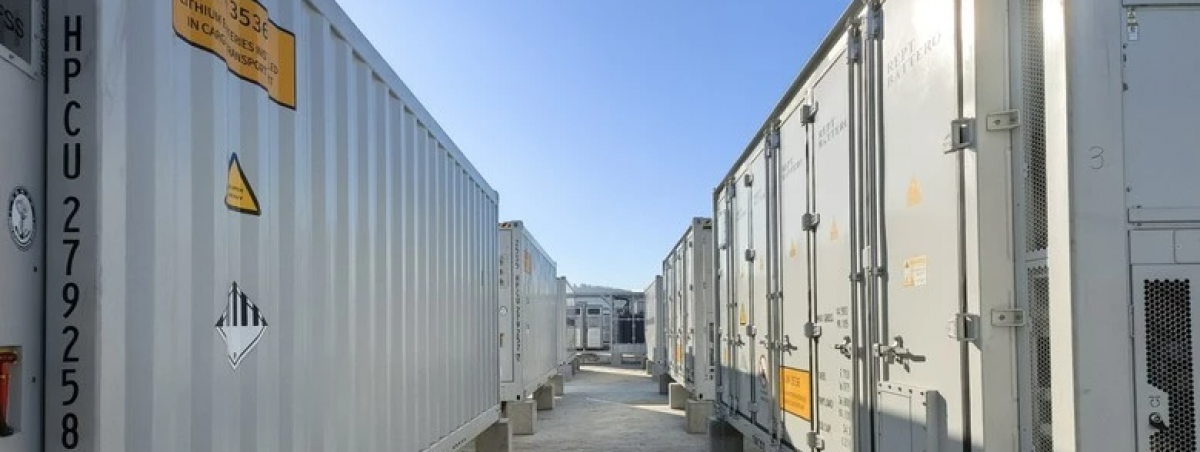
Ørsted has completed construction of its 300MW/600MWh Iceni battery energy storage system in Norfolk, its first large-scale UK battery, a milestone that matters to developers and grid operators because it shows storage built beside an offshore wind farm sharing the wind farm’s grid connection. Commissioning and testing are under way.
Ørsted is a Danish offshore wind developer whose Hornsea 3 offshore wind farm shares a grid connection point with Iceni, the battery sited beside its onshore converter station near Norwich.
Tesla is the US electric vehicle and energy storage manufacturer that supplied 170 Megapacks for the project.
Knights Brown is a privately owned UK construction company with specialist energy sector capability that handled construction.
Hitachi Energy is a global energy technology company among the companies involved in the project.
The co-located design resulted from three years of collaboration between Ørsted, system operator NESO and transmission owner National Grid Electricity Transmission, and was designated a Pathfinder project by the UK government’s Offshore Transmission Network Review.
The site uses a split layout, with two battery areas either side of the onshore converter station linked by 18 cross-site 33kV cables, each more than 600 metres long.
Beatrice d’Eufemia, project manager for Iceni BESS at Ørsted, said: “It’s a milestone moment for Ørsted that construction is now complete on our first large-scale battery energy storage system in the UK.” Richard Swann, construction manager for Iceni BESS at Ørsted, said: “It’s a real testament to the hard work, dedication and co-operation of the team from many different organisations that the construction has been completed successfully.”
Iceni’s storage capacity is equivalent to the daily electricity consumption of 80,000 UK homes, and it is expected to be among Europe’s largest battery storage systems once operational.
ESS News also noted that the shared grid connection point brought additional engineering challenges compared with a standalone connection.
UK wind curtailment costs passed £1.5 billion in 2025, with NESO projecting up to £8 billion annually by 2030 without intervention.
For the sector, a battery built beside an offshore wind farm’s converter station shows storage being designed into transmission connections rather than added separately, as curtailment costs rise.
Source: Renewables Now / New Civil Engineer / Solar Power Portal / Best Magazine / ESS News / Tim Harper





.png)