
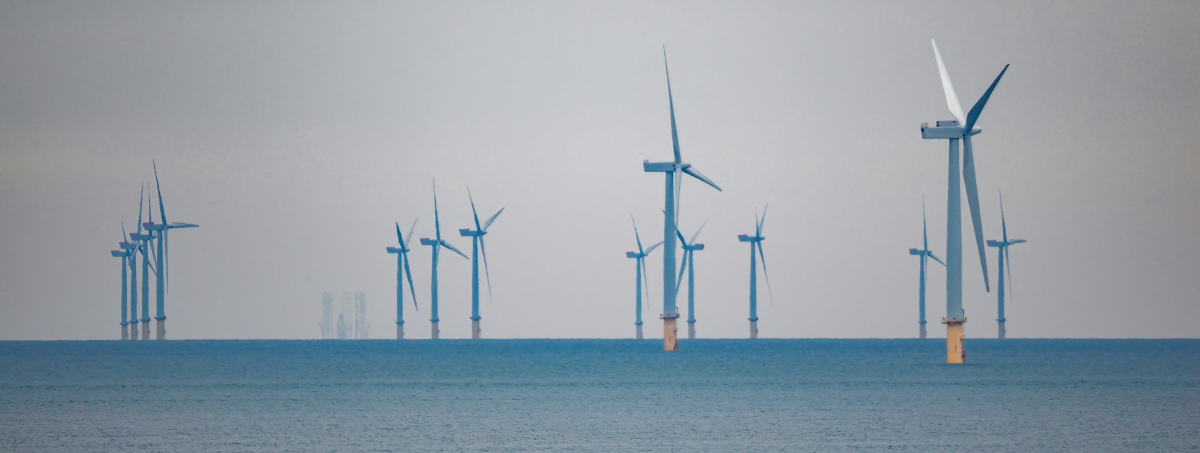
Britain’s energy transition is entering an infrastructure-intensive phase, and the signal for Irish business energy leaders is unmistakable. GlobalData’s latest UK power market report projects that installed capacity will almost double between 2025 and 2035, with renewables reaching 73% of the generation fleet, led by offshore wind, solar PV and onshore wind. Because Ireland is one of the markets linked to the UK by operating interconnectors, that expansion will shape Irish prices, security of supply and investment flows.
The analysis deserves a confident, positive reading. The pipeline is deep, the policy tools are mature, and the remaining task is delivery at pace. Three themes matter most for business energy leaders: grid connections as the binding constraint, flexibility as the next investment frontier, and cross-border coordination as an advantage Ireland can use.
The grid is the main delivery constraint. A large share of the UK renewable pipeline is waiting in connection queues, and new offshore generation needs expanded transmission from coastal landing points to demand centres. GlobalData analyst Attaurrahman Ojindaram Saibasan cautions that winning contracts does not guarantee projects get built. Ireland knows this well: 15% of wind generation was lost in the first half of 2026, and the €18.9 billion EirGrid investment programme is the response.
Flexibility is the second theme. Saibasan says the network must become more anticipatory, with storage, demand response and digital flexibility developing alongside generation rather than after it. Irish data shows the commercial logic. Wind energy supplied 37% of Ireland’s electricity in September, yet wholesale prices reached €226.51 per megawatt-hour on gas-dependent days against €142.78 on the windiest days. Energy storage captures that gap.
Interconnection is the third theme. The UK has operating links to France, the Netherlands, Belgium, Norway, Denmark and Ireland, and GlobalData notes these support security of supply while raising the importance of coordinated market rules. In September, 19% of Irish electricity arrived by interconnector, and the 700MW Celtic Interconnector to France, due at the end of 2026, will widen Ireland’s options further.
Three actions stand out for C-suite leaders. First, treat grid readiness as a core investment criterion, mapping projects against EirGrid’s 29 priority transmission upgrades before committing capital. Second, build energy storage and demand response into every renewable energy procurement strategy, so clients capture price differences between windy and gas-dependent hours. Third, track UK reforms, including the Review of Electricity Market Arrangements, because British locational pricing decisions may influence cross-border investment and Irish contracts.
Britain’s challenge is converting an extensive pipeline into operating assets, and Ireland faces the same test. Business energy leaders who align deployment with grid expansion and flexibility will turn the energy transition into genuine and durable commercial advantage on both islands as the decade’s build-out accelerates.





.png)