
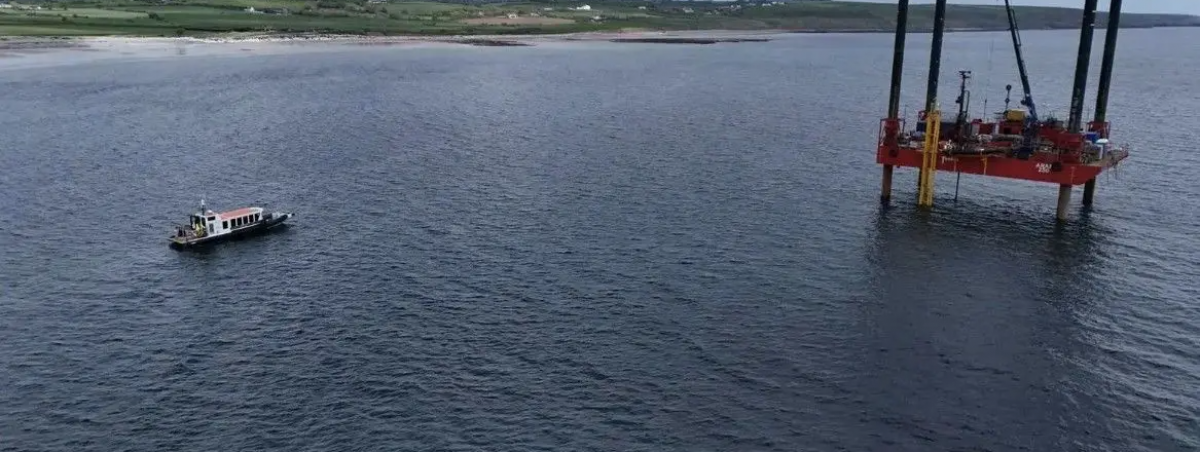
Fugro has completed its 2026 marine and coastal survey campaign for EirGrid’s Powering Up Offshore - South Coast programme, gathering data for the grid infrastructure that the planned 900MW Tonn Nua offshore wind farm will need, a milestone that matters to developers, grid operators and supply chains because the data informs the offshore and onshore grid designs the project timeline depends on. The campaign involved almost 70,000 hours of survey work across 2,337 kilometres of maritime area.
Fugro is a Dutch marine survey specialist appointed under a seven-year framework agreement with EirGrid for site investigations on the South Coast grid programme, also running a two-year marine mammal monitoring contract using eight seabed acoustic monitoring stations.
EirGrid is the Irish transmission system operator responsible for delivering Tonn Nua’s offshore and onshore transmission infrastructure, and is running a twelve-week public consultation until 8 December on connection options in Cork and Wexford.
ESB is Ireland’s state-owned electricity utility and, with Danish developer Ørsted, forms the joint venture that won rights to develop Tonn Nua off County Waterford in Ireland’s second offshore wind auction in November 2025.
The 2026 work builds on a first phase in 2025 that covered 3,770 kilometres of seabed over more than 40,000 man-hours. First power is targeted for the mid-2030s.
According to EirGrid, the data will inform engineering, environmental and planning assessments for potential offshore substations, subsea cable corridors and onshore grid connections, while feedback from communities, landowners, fisheries and other marine users will shape the next stage.
The development rights were secured at a strike price of €98.719 per MWh under a 20-year contract for difference, below Ireland’s 2025 average wholesale price of €114 per MWh.
The CfD sets a longstop of 1 January 2037 for operation, while the grid connection is due to go live in 2033.
Tonn Nua is one of four maritime sites in the South Coast area identified for future offshore wind, so the survey data may also support other potential projects.
For the sector, completed seabed and coastal surveys move Irish offshore wind from auction result to grid design, the stage at which cable corridors, landfalls and substation sites begin to be fixed.
Source: Offshore Energy / gov.ie / RTE / NS Energy Business / reNEWS






.png)