
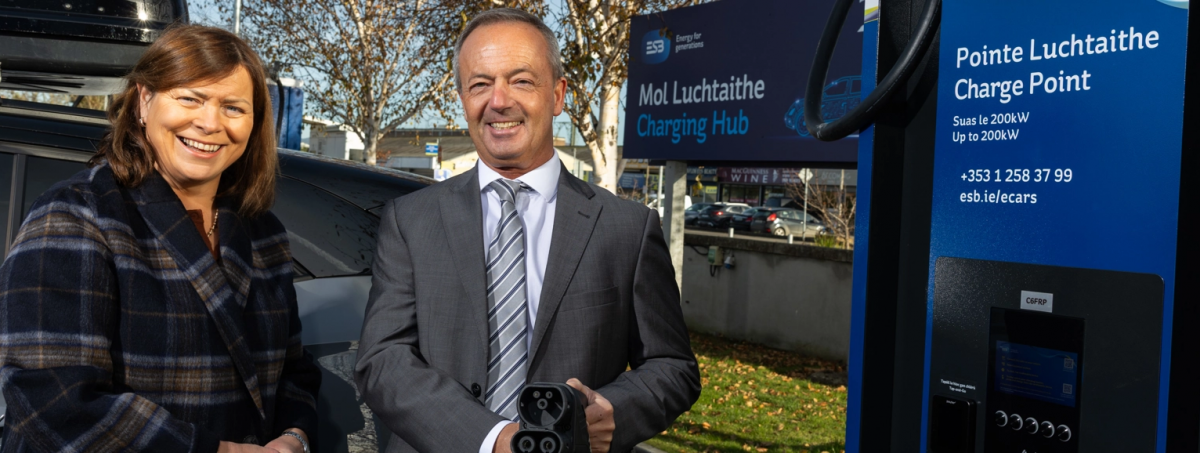
ESB and Tesco Ireland have announced a partnership to deploy fast and high-power EV chargers of up to 200kW at selected Tesco stores, according to announcements from both companies on 16 November, a rollout that matters to charging operators, retailers and energy suppliers because it puts higher-power charging at everyday shopping destinations. The first phase covers Tesco Clarehall, Clearwater, Drogheda, Dundalk and Maynooth, according to Checkout, and expands on an existing network of 50 sites, according to Silicon Republic.
ESB said the rollout complements its existing nationwide network and is the first phase of a growing partnership, with more sites planned over time.
ESB is Ireland’s state-owned electricity utility that operates a nationwide public EV charging network, according to its announcement.
Tesco Ireland is the Irish grocery retailer that said in 2019 it had sourced all its electricity from renewable sources since 2017, according to TechCentral.
Suzanne Ward, head of emerging markets at ESB, said in ESB’s announcement: “ESB is proud to partner with Tesco Ireland in expanding access to EV charging across its sites.” Darragh O’Brien, minister for transport and minister for climate, energy and the environment, said in a statement reported by Silicon Republic: “The continued expansion of Ireland’s EV charging infrastructure is essential as we support more people to make the transition to electric vehicles.”
TechCentral reported in 2019 that the companies’ first partnership planned 22kW dual chargers at 52 Tesco stores in 18 counties, providing up to 145km of range in an hour.
The new chargers are up to 200kW, against 22kW units in the 2019 plan, according to TechCentral.
Silicon Republic reported that a petrol station chain also plans to invest about €8 million over 18 months in 90 charging points across 11 sites.
Ireland had 235,000 electric vehicles at the end of 2025, according to the European Investment Bank, against a government target of 30% of the private car fleet by 2030.
The announcements did not state the number of chargers, the investment or completion dates.
For the sector, a retail and utility partnership moving from 22kW to 200kW charging shows destination charging shifting toward faster sessions at supermarket car parks as EV numbers grow.





.png)