

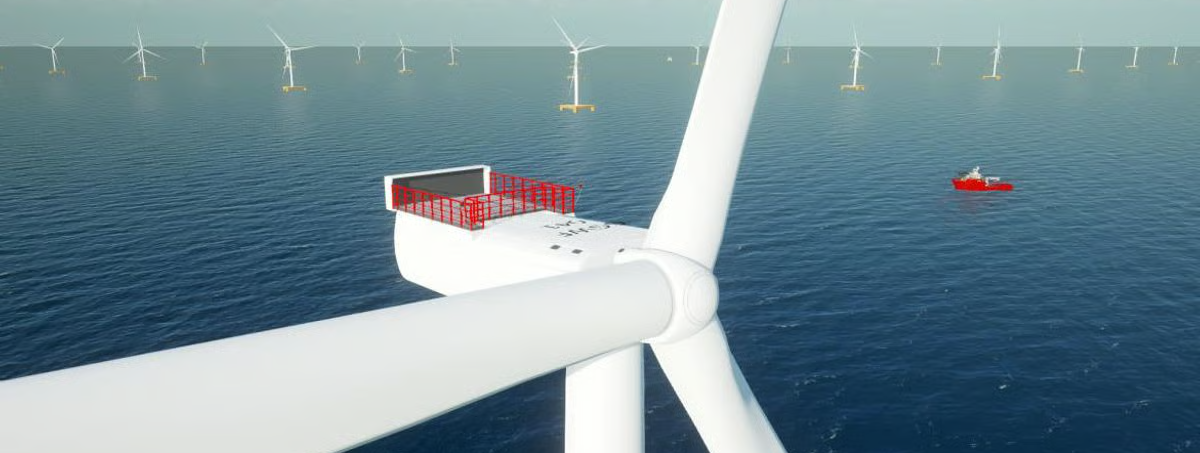
Sumitomo Corporation has joined the Gwynt Glas floating offshore wind project as an equal partner alongside EDF power solutions UK and Ireland and ESB, each now holding a 33.33% stake, a restructuring that brings fresh balance sheet strength to a project advancing through UK planning at a stage when many floating wind schemes are struggling to secure committed capital. DP Energy continues providing development support, drawing on its early-stage delivery and local engagement expertise.
Gwynt Glas is a proposed floating offshore wind farm of up to 1.5GW in the Celtic Sea, which submitted its Scoping Report to the Planning Inspectorate this summer.
Sumitomo Corporation is a Tokyo-headquartered trading and investment conglomerate with global energy solutions operations.
EDF power solutions UK and Ireland is a renewable energy developer operating wind, solar and battery storage assets across England, Ireland, Scotland and Wales, targeting 10GW of operational capacity by 2035.
ESB is Ireland's state-owned electricity utility, with offshore wind central to its net zero strategy.
DP Energy is a Cork-headquartered renewable energy developer with wind, solar and ocean energy projects across Ireland, the UK, Canada and Australia.
ESB's Jim Dollard said offshore wind will be a cornerstone of the delivery of our net zero carbon emissions strategy.
The move brings a well-capitalised conglomerate into a technology still without a single commercial-scale project operating anywhere in the world, at a point when many floating wind developers are struggling to attract equity as costs and grid connection timelines lengthen.
For EDF and ESB, diluting to an equal one-third stake trades some project economics for balance sheet relief and Sumitomo's global project financing experience, a trade increasingly common as offshore wind capital needs outpace what even large utilities want to hold alone. ESB has taken a similar approach before, co-owning the NnG offshore wind farm in Scotland with EDF power solutions.
Japanese trading houses have been steadily building offshore wind positions across Europe, treating floating wind as a technology worth entering early rather than waiting for cost curves to fall, given the lead time needed to build supply chains and installation vessels.
For the sector, the restructuring signals that pre-construction Celtic Sea floating wind is attracting capital typically reserved for projects much further along, a marker other UK and Irish offshore pipelines will be measured against.
Source: Renewable Energy Magazine






.png)