
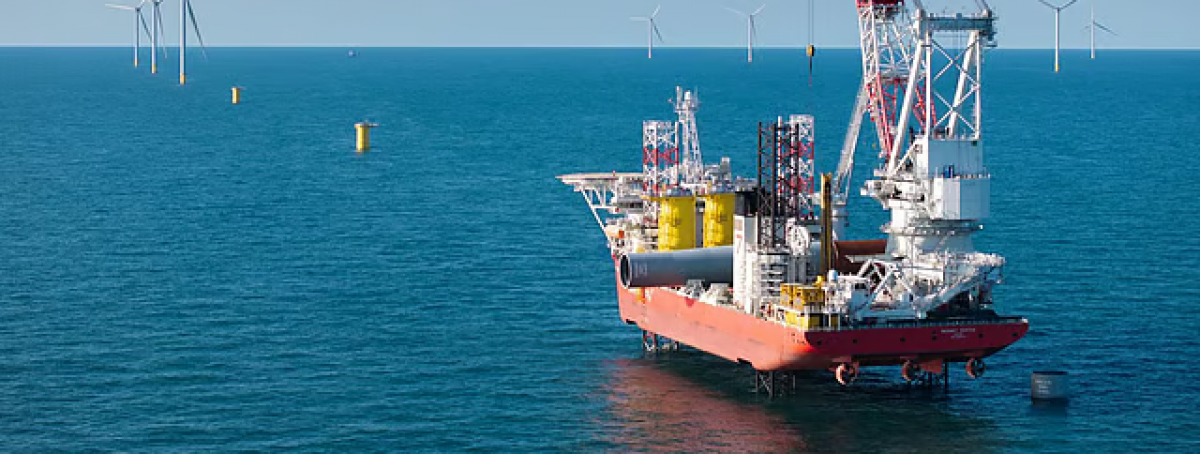
Masdar, the Abu Dhabi-headquartered, UAE state-owned clean energy company, and ScottishPower Renewables have completed installation of all 95 foundations at the £4 billion East Anglia THREE offshore windfarm off the Suffolk coast, a milestone that matters for a UK offshore wind pipeline where cost inflation and supply chain delays have repeatedly pushed other projects off schedule. The 1.4GW project, Masdar's first 50:50 offshore wind joint venture in the UK, is on track to become fully operational by the end of 2026, supplying clean power to more than 1.3 million homes.
Masdar is an Abu Dhabi-headquartered, UAE state-owned clean energy company, owned by Abu Dhabi National Oil Company, Mubadala Investment Company and Abu Dhabi National Energy Company, with more than 20GW of renewable generation capacity globally.
ScottishPower Renewables is the Glasgow-headquartered renewables arm of ScottishPower, itself a subsidiary of Spanish utility Iberdrola.
Masdar executive director Husain Al Meer said the completion is a significant milestone and a remarkable engineering achievement. ScottishPower Renewables chief executive Charlie Jordan called it a true engineering triumph.
Wood Thilsted provided foundation design and Siemens Gamesa manufactured turbine blades at its Hull factory, among nearly £2 billion committed to the UK supply chain.
East Anglia THREE is the second project delivered under Masdar and Iberdrola's €15 billion strategic partnership, giving the UAE state-owned developer a growing UK offshore wind footprint spanning stakes in London Array, Hywind Scotland and Dogger Bank.
The completion lands against a backdrop of record global wind installation, with 165 gigawatts of new capacity added in 2025, up 40% on 2024, even as several other UK and European offshore projects have faced delays or cancellation over rising costs.
The nearly £2 billion already committed to the UK supply chain, spanning foundation design, blade manufacturing and vessel charters from UK-based contractors, gives the project a domestic economic footprint likely to feature in future debate over Gulf state investment in critical UK energy infrastructure.
For the sector, a state-owned Gulf investor delivering ahead of, rather than behind, an offshore wind construction schedule is a notable counterpoint to delays affecting comparable projects, and a marker other developers assessing UK offshore wind risk will weigh.
Source: Gulf News / The National





.png)