
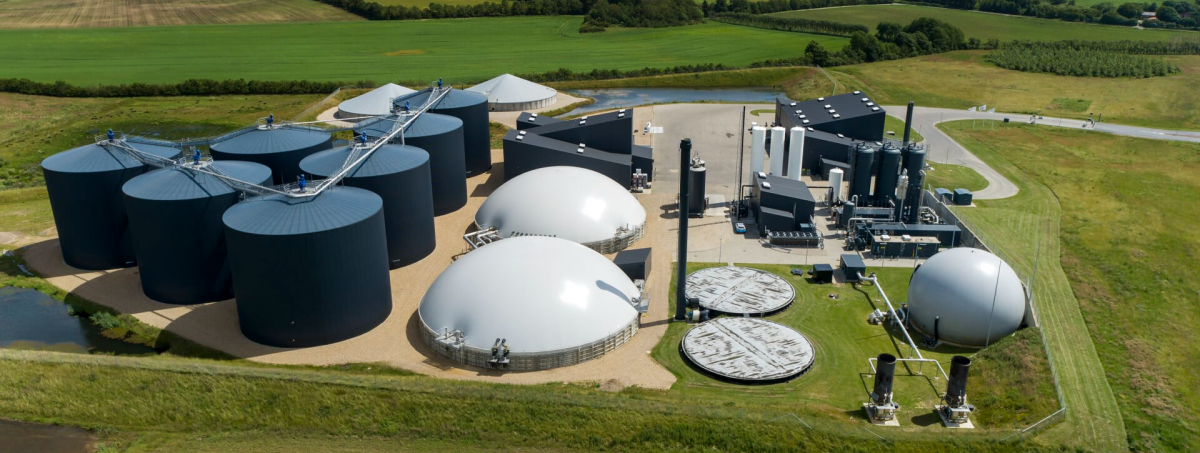
Gas Networks Ireland has connected Bia Energy's anaerobic digestion plant at Huntstown, County Dublin, directly to the national gas network, Ireland's first such connection and a working template other biomethane developers can now point to when assessing their own route to market. The €90 million facility, once at full capacity, is expected to supply up to 120 gigawatt-hours of biomethane annually, more than Ireland's average daily gas demand.
Bia Energy is a Dublin-based anaerobic digestion operator processing food and agricultural waste into biomethane and organic fertiliser, part of the Sretaw group, an investment vehicle founded by Irish businessman Eamon Waters.
Gas Networks Ireland is the state-owned operator of Ireland's national gas network, which has connection agreements with six other biomethane producers alongside Bia Energy.
Bia Energy chief executive Brendan Traynor said the connection was "a very significant day, not just for the respective teams at Bia Energy and Gas Networks Ireland, but also for the entire renewable gas industry in Ireland." Bia Energy received almost €3.9 million from the government's National Biomethane Strategy Capital Grant Scheme toward the project.
The connection matters less for its size, 120GWh is a fraction of the roughly 5.7 terawatt-hours the state is targeting from biomethane by 2030, than for proving the direct-injection model works technically and commercially. Several industry players consider the current pace of plant construction well behind the trajectory needed to hit that target, since meeting it would require several dozen more anaerobic digestion facilities nationally.
Sector consolidation is already underway around that gap: Deloitte advised on the sale of Waterford-based developer Ormonde Organics to European biogas group Heygaz earlier this year, pointing to smaller Irish developers seeking the scale and capital that grid-connected projects require.
Natural gas still plays a structural backup role in Ireland's electricity mix when wind generation drops, meaning biomethane's near-term value lies less in displacing gas outright than in decarbonising the fuel already embedded in that backup role.
For the sector, a working direct-connection model gives Gas Networks Ireland's six other pending biomethane agreements a proof point, reducing the technical risk premium the next projects in the pipeline are likely to face.
Source: energynews.pro / The Irish Times / Deloitte




.png)