
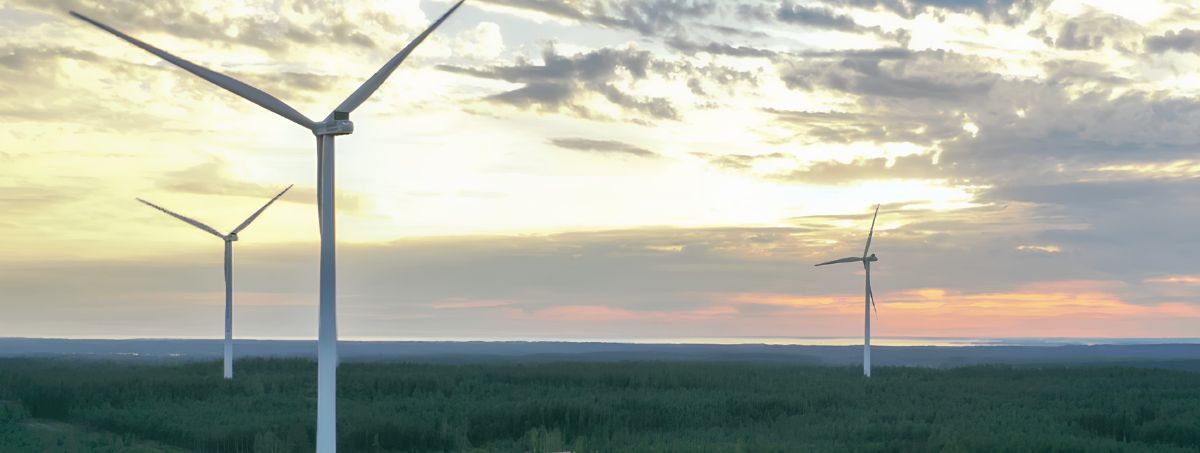
Amazon has signed a 36MW power purchase agreement with Statkraft for the Mossy Hill onshore wind farm near Lerwick in Shetland, a deal that matters to developers, suppliers and large energy users because corporate PPAs give developers the certainty to move projects forward. Mossy Hill is expected to be operational in November 2030, generating enough electricity for the equivalent of more than 57,000 homes a year.
Amazon is a US technology and retail company whose UK carbon-free energy portfolio includes more than 50 projects with over 1GW of capacity, enough to power more than 1.3 million UK households a year, and last year announced plans to invest £40 billion in the UK by 2027.
Statkraft is a Norway-based renewable energy developer developing the Mossy Hill wind farm and operating across the UK and Ireland.
John Boumphrey, country manager for UK and Ireland at Amazon, said: "Our latest project in the Shetland Islands builds on years of investment in renewable energy across the UK. From the Shetland Islands to the coasts of England, our renewable energy investments are creating real jobs and powering local communities." Kevin O'Donovan, country manager for UK and Ireland at Statkraft, said: "We're pleased to have agreed a partnership with Amazon for our Mossy Hill Wind Farm in Shetland, which gives us the certainty to move the project forward."
Mossy Hill relies on grid infrastructure that only recently arrived: Shetland was connected to the GB grid for the first time in 2024 through a 260km subsea link, and Statkraft has said its three Shetland wind farms have capacity booked on the 600MW cable.
Local scrutiny has followed the announcement. Statkraft confirmed Amazon is the sole off-taker, and talks on a possible element of community ownership with local community councils have produced no announced agreement.
Independent analysis cited in the announcement found Amazon invested more than £3 billion in UK low-carbon technologies between 2021 and 2025, supporting up to 34,000 jobs.
For the sector, a single corporate buyer taking all of a project's output shows how PPAs can give remote wind projects the certainty to proceed, while leaving community ownership and local benefit questions open.
Source: Sustainability Magazine / Shetland News / Scottish Construction Now






.png)