

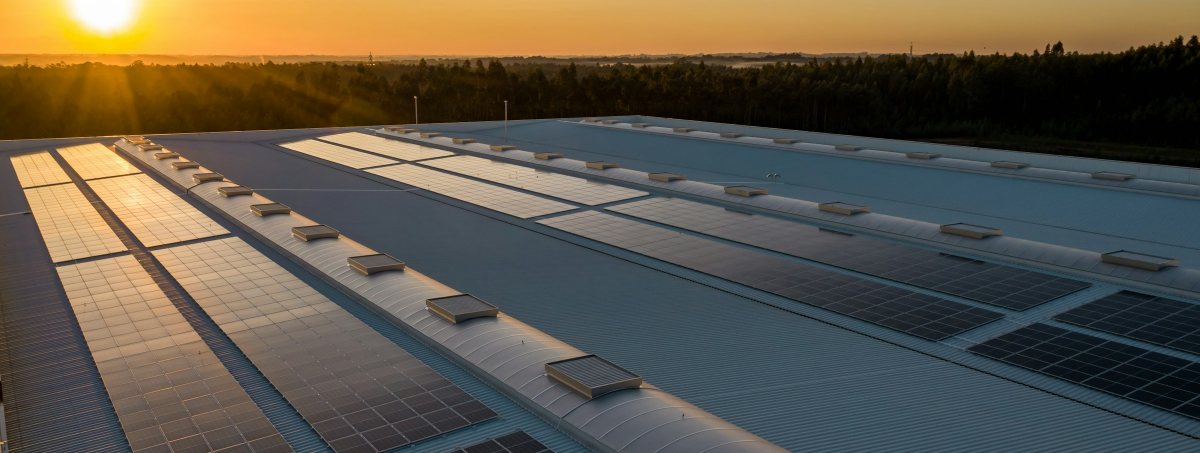
Ireland’s solar energy sector has delivered one of the fastest expansions of renewable capacity in the country’s history. Solar Ireland’s Scale of Solar 2026 report, launched at Government Buildings by Minister Darragh O’Brien, reveals total connected solar capacity reached 2.7GW by end of May 2026, representing 297% growth since 2023 and more than 53% in twelve months. The scale and pace of this expansion is a clear commercial signal for business energy leaders.
The report makes a powerful case that solar has moved from a peripheral technology to a central pillar of Ireland’s electricity system. Three findings give business energy leaders reason for confidence: the breadth of deployment across utility, commercial, and micro-generation segments; the volume of electricity now being delivered; and the clear path to Ireland’s 8GW target by 2030.
The generation data confirms solar’s growing contribution. In the twelve months to end of May 2026, solar generated more than 1.17 terawatt hours of electricity, powering the equivalent of 460,000 Irish homes. During May, solar reached a peak instantaneous contribution of 37.1% of electricity supply. Utility-scale capacity surpassed 1.59GW, micro-generation reached 805MW, and small-scale commercial rooftop stood at 58MW across farms, schools, retail, and community buildings.
The county-level data illustrates how widely deployment has spread. Clare leads with 51 rooftop solar systems per 1,000 people. Ronan Power, CEO of Solar Ireland, noted that by end of 2026 solar will have approximately 3GW of connected capacity, on a clear trajectory toward the 8GW Climate Action Plan target for 2030. From near a standing start four years ago, Ireland has built a solar sector of genuine national scale.
The economic significance is substantial. KPMG has estimated the solar industry’s contribution to Irish gross value added at between €437 million and €514 million in 2024, with the sector projected to deliver more than €2.3 billion in cumulative GVA between 2025 and 2030. For business energy leaders, this represents the scale of the commercial ecosystem being built around solar deployment, financing, and services.
Three priorities stand out for C-suite leaders. First, treat the trajectory from 2.7GW to 8GW as a defined market opportunity, with utility, commercial rooftop, and micro-generation each requiring distinct propositions. Second, engage with SEAI solar schemes and the LEAP framework to position clients ahead of grid constraints. Third, develop Solar-as-a-Service and zero-capex financing to capture the commercial rooftop market that the 58MW figure shows remains at an early stage of penetration.
Ireland’s solar sector has grown almost 300% in three years. The next phase will be defined by who captures the journey to 8GW. Business energy leaders who build the supply chain, financing, and service capabilities for that expansion will be at the centre of Ireland’s most consequential energy decade.
(The views expressed by the writer are his/her own and do not necessarily reflect the views or positions of BusinessRiver.)







.png)